


Why Notes Matter
A single security assessment often feeds many different reports, and each one is written for a different reader with different needs.
For example, the same assessment might be used to produce:
A comment that is helpful in one report may be irrelevant, too detailed or even inappropriate in another. An internal note about a weakness being fixed, for example, may belong in a management report but not in a report shared with a client.
By creating notes for specific reports, you make sure each audience sees the commentary that matters to them, and nothing they shouldn't.
You can tag notes to make them reportable.
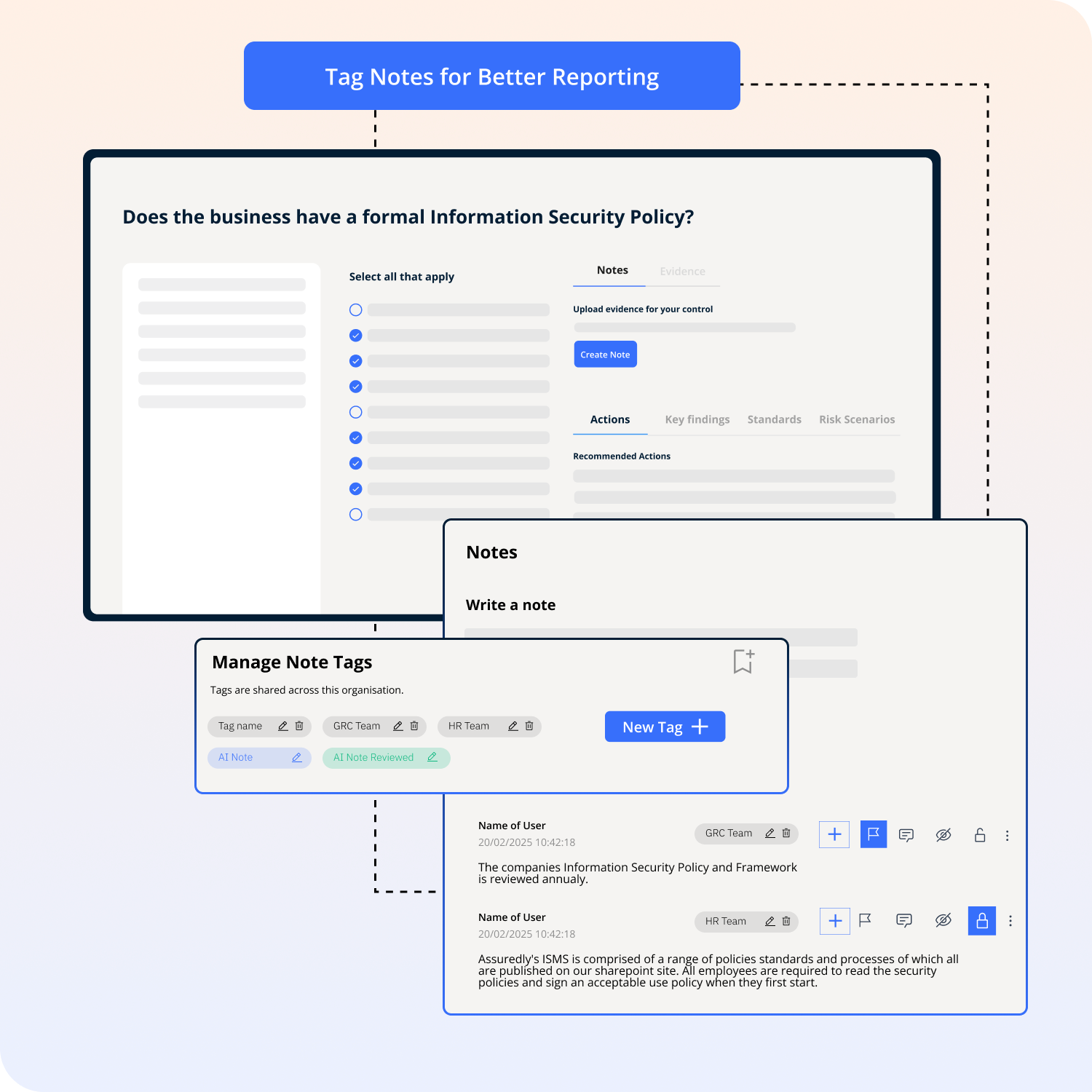
AI Enabled accounts - For AI enabled accounts an addtional 2 in-built tags exists - AI Note created and AI Note reviewed
All notes can be added to reports and filtered totags or flags.
How Assuredly helps: Managing Custom Notes
In Assuredly, you can create custom notes against any assessment question and tag them so your commentary appears in the right reports.
Notes sit alongside the question and control they relate to, so anyone reviewing the assessment or reports can see the context behind an answer.
Tagging notes then lets you decide which reports each note should feed into, such as a supplier report, a client security capability report or an internal management report.
All customers get access to our new Tagging features.
There are four built in methods to tag a note or you can create your own custom Tags.

To flag a note:
Read more about Reporting Notes.
Adding notes to an answer allows you to add more context to your assessments.
Every business applies security controls in its own way, and comments help explain how each control works in the specific context of the business being assessed.
A comment that is helpful in one report may be irrelevant, too detailed or even inappropriate in another.
By filtering notes for specific reports, you make sure each audience sees the commentary that matters to them, and nothing they shouldn't.
For example:


